
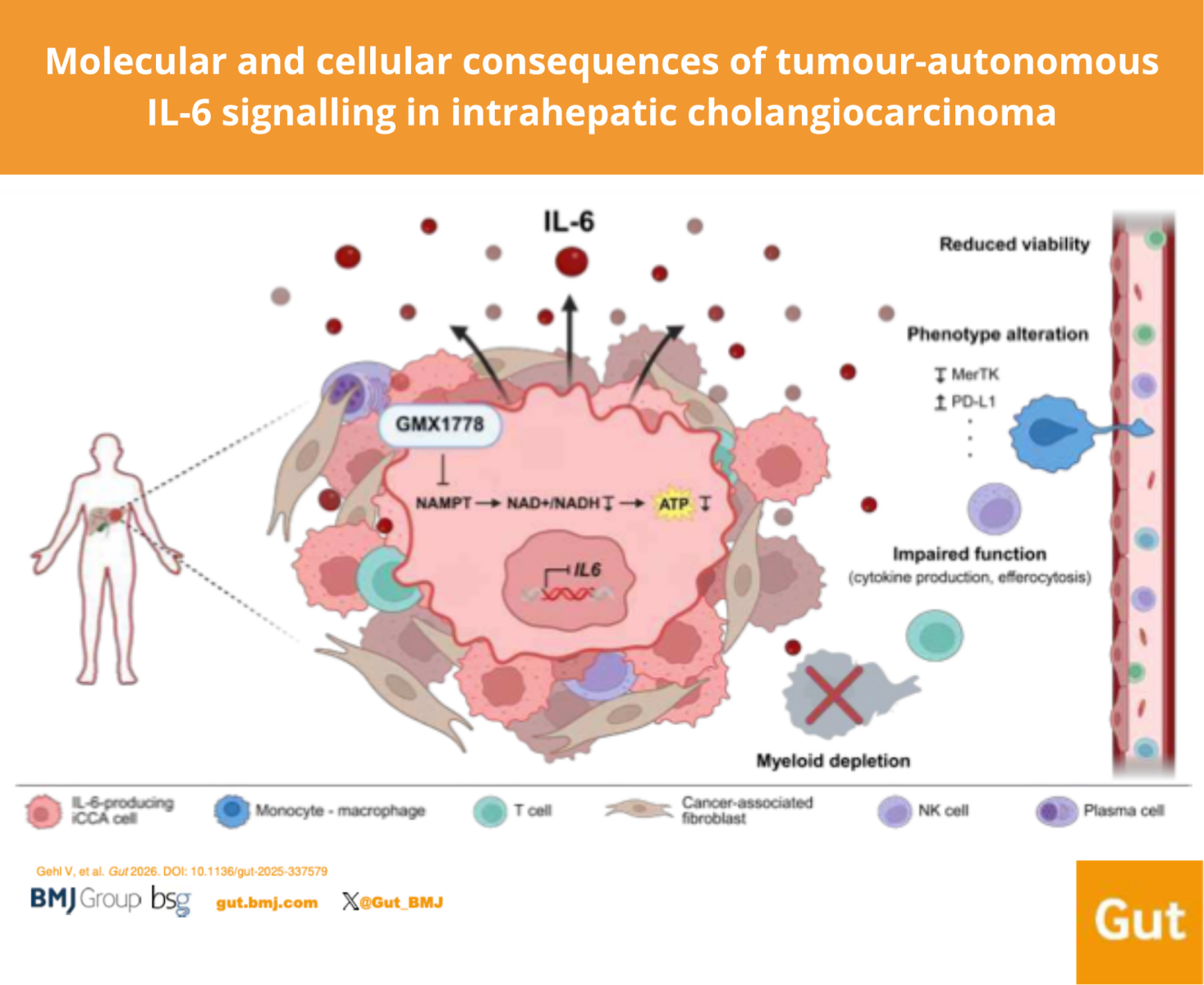


COST Action-supported research in Gut reveals how autonomous IL-6 signaling reshapes tumor biology and the microenvironment in intrahepatic cholangiocarcinoma
A new study led by Prof. Jesper Andersen provides important new insights into intrahepatic cholangiocarcinoma (iCCA), one of the most aggressive forms of liver cancer.
Published in Gut, the research reveals how autonomous IL-6 signaling within the tumor reshapes tumor biology at multiple levels. It drives transcriptional and metabolic reprogramming in cancer cells while profoundly altering the tumor microenvironment and immune response. Crucially, the study identifies new therapeutic vulnerabilities, particularly related to metabolic pathways, highlighting new opportunities for targeted treatment strategies.
By integrating advanced approaches—including patient-derived models, high-throughput drug screening, and spatial transcriptomics—this work offers a comprehensive view of the mechanisms underlying tumor progression. These results underscore the immense value of COST-driven international collaboration in advancing precision medicine approaches for bile duct cancers.
Header image source: Supplementary Material / Article Figures, Gut (2026) / BMJ.